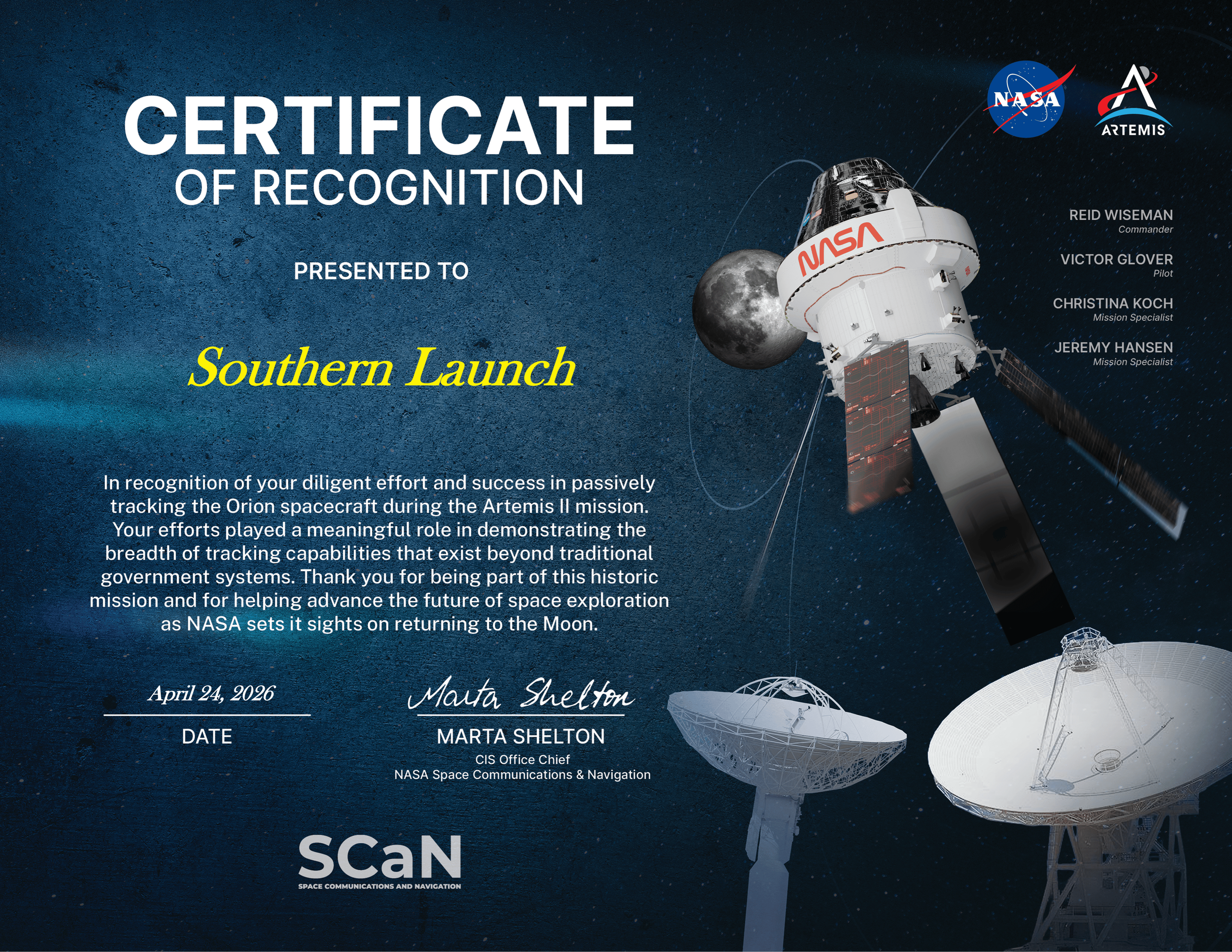

Southern Launch supports NASA’s Artemis II Mission with Cislunar Tracking and Data Capture
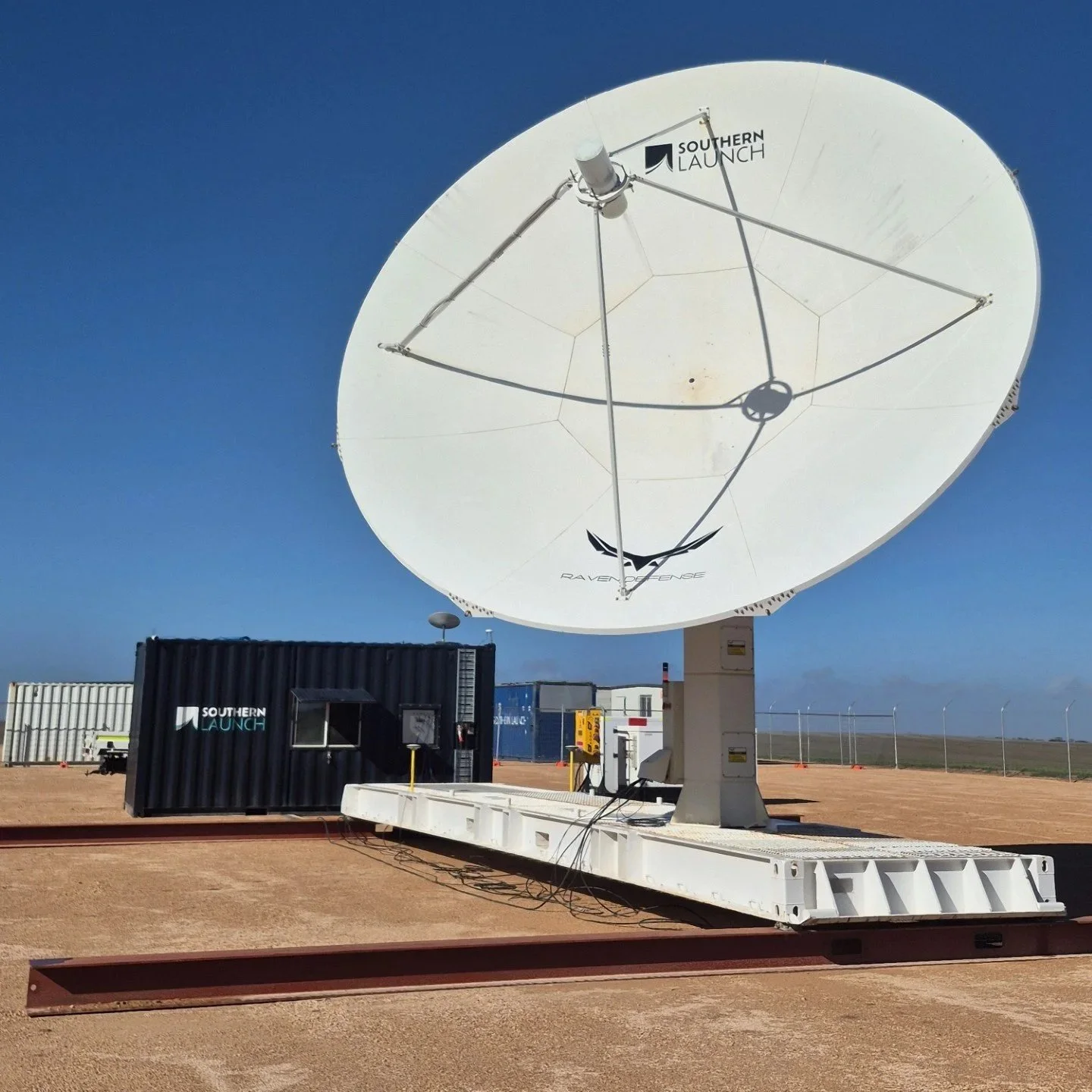
Southern Launch’s RavemnTALON telemetry dish at Koonibba Test Range
Southern Launch was selected to support the NASA Artemis II Orion mission, helping NASA to assess the broader aerospace community’s tracking capabilities to support future Moon and Mars mission through passive Doppler tracking from Australia.
The Artemis II mission was the first crewed flight of the Orion spacecraft around the Moon and the first crewed moon mission in 53 years. Southern Launch provided ground-based tracking support enabled by infrastructure at the Koonibba Test Range.
The support was enabled by infrastructure at the Koonibba Test Range, including a TALON telemetry dish from Raven Defence, a high-performance S-band antenna system capable of passive Doppler tracking and flight data collection.
Southern Launch’s involvement focused on passively tracking the Orion spacecraft, enabling the collection of high-quality tracking data without transmitting commands or signals to the vehicle. This initiative built on a previous effort in which 10 volunteers successfully tracked the Orion spacecraft during Artemis I in 2022.
This approach supports NASA’s broader objective of expanding resilient, global tracking for missions operating in cislunar space, the region between Earth and the Moon that will underpin future human and robotic exploration.
The activity builds on Southern Launch’s expanding range services capability, which includes mission support, tracking, and data services for domestic and international space customers. Participation in Artemis II also strengthened Australia’s contribution to global space exploration efforts and highlights the strategic value of southern hemisphere ground infrastructure.
By supporting Artemis II, Southern Launch helped to demonstrate how commercial and international partners can complement traditional government space networks. An approach expected to become increasingly important as lunar missions increase in frequency and complexity.
NASA’s Artemis program aims to return humans to the Moon and establish the foundations for long-term exploration, including future missions to Mars.